Christmas: order by Mon 14 Dec for delivery in time
Christmas: order by Mon 14 Dec for delivery in time

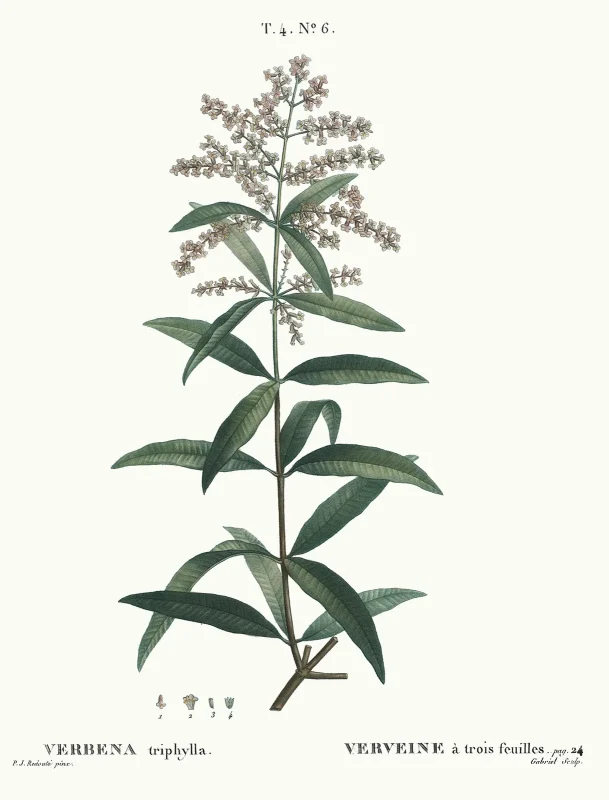
Verbena
Aloysia citrodora
Sharp, green and lemony, and grown for that scent for centuries.
- Botanical name
- Aloysia citrodora
- Also called
- lemon verbena, lemon beebrush
- Family
- Verbenaceae (verbena family)
- Part used
- Leaf
- Where it’s found
- A tall, lemon-scented shrub of the warm, dry uplands of South America, from Argentina and Chile to Bolivia and Peru. Spanish travellers carried it to Europe in the 1600s and 1700s, and it is now grown in gardens in France, Morocco and Australia.
- Season
- Leafy through summer; tiny white flowers in late summer
- Scent
- Citrus, Fresh, Herbal
- Feel
- Light and fresh, gone into the skin in moments
Verbena has been grown in kitchen gardens for centuries for the smell alone: sharp, green and lemony, without the sweetness of citrus. Brush past the plant on a warm day and the whole garden smells of it. Leni puts it in a light, quick-absorbing cream with very little else, which makes it the simplest moisturiser in the range. In France it is still a favourite after-dinner tea, called verveine, and Victorian ladies tucked the leaves into handkerchiefs to keep them fresh.
Traditional use
Brought from South America to European gardens by Spanish travellers, it became a favourite in perfumes, finger bowls and herbal teas.
Pairs well with
Find it in
In 1 product
Showing the single result